
Parrotfish - There is Something Fishy About This Parrot!
On a bright Sunday afternoon, you are hiking up a mountain trail. With the sun beating down on you, you realise (too late) that you have forgotten to pack in the sunscreen. Hot and sweaty, you plop down on the grass to set up your camp, only to realise that you have forgotten your bag containing the insect repellent and mozzie net. Forlorn, you wait for the tough night ahead, after the trials of the day.
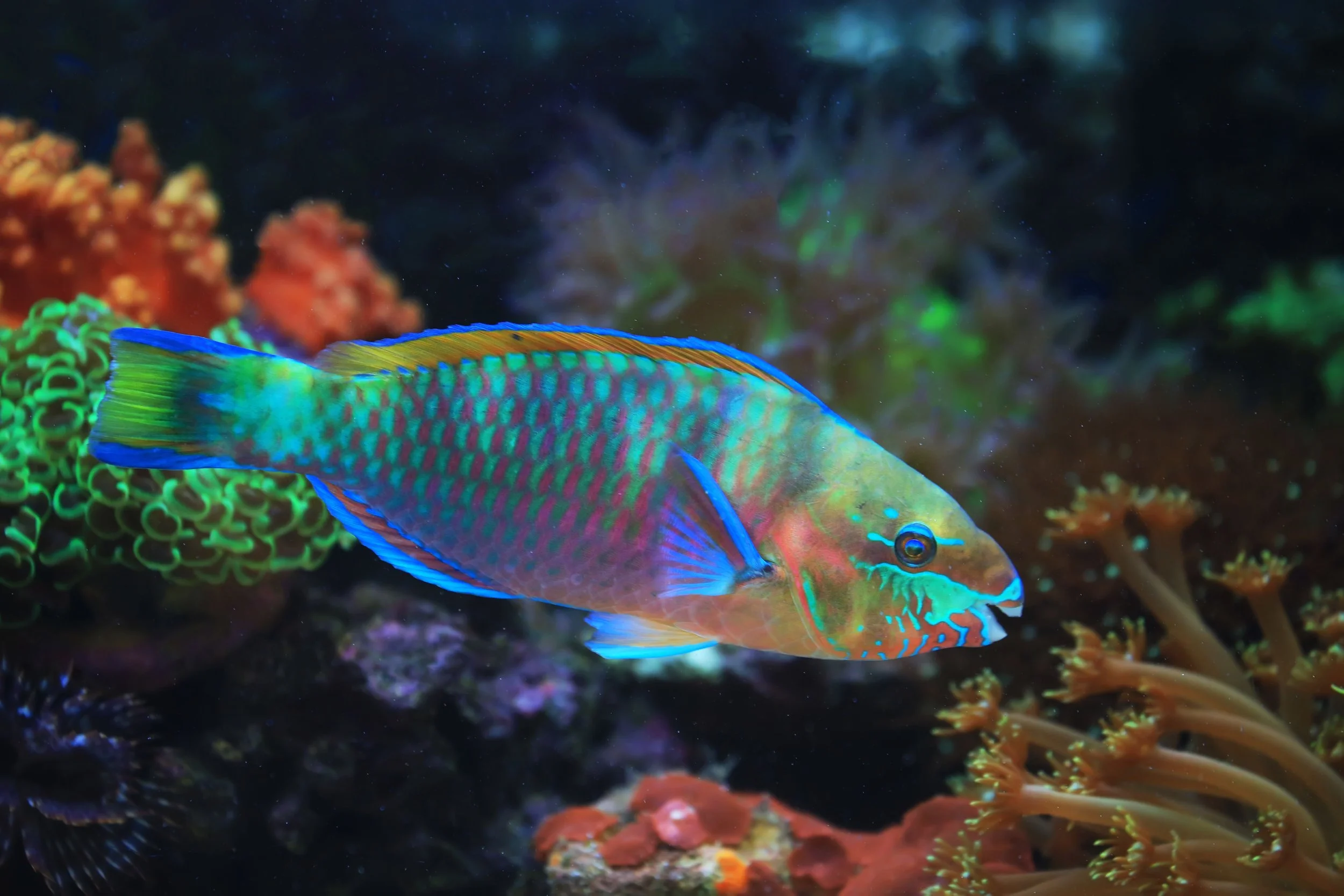
Fig 1: Colorful parrotfish (Scaridae) swimming through a coral reef. (Photo credit: Pexels/Jeffry Surianto)
If you were a parrotfish, though, none of this would have bothered you. You would have just produced your own slime sunscreen during the day to escape the harsh sun. At night, you would have secreted a mucus cocoon to protect yourself from blood-sucking parasites and bad-tempered predators.
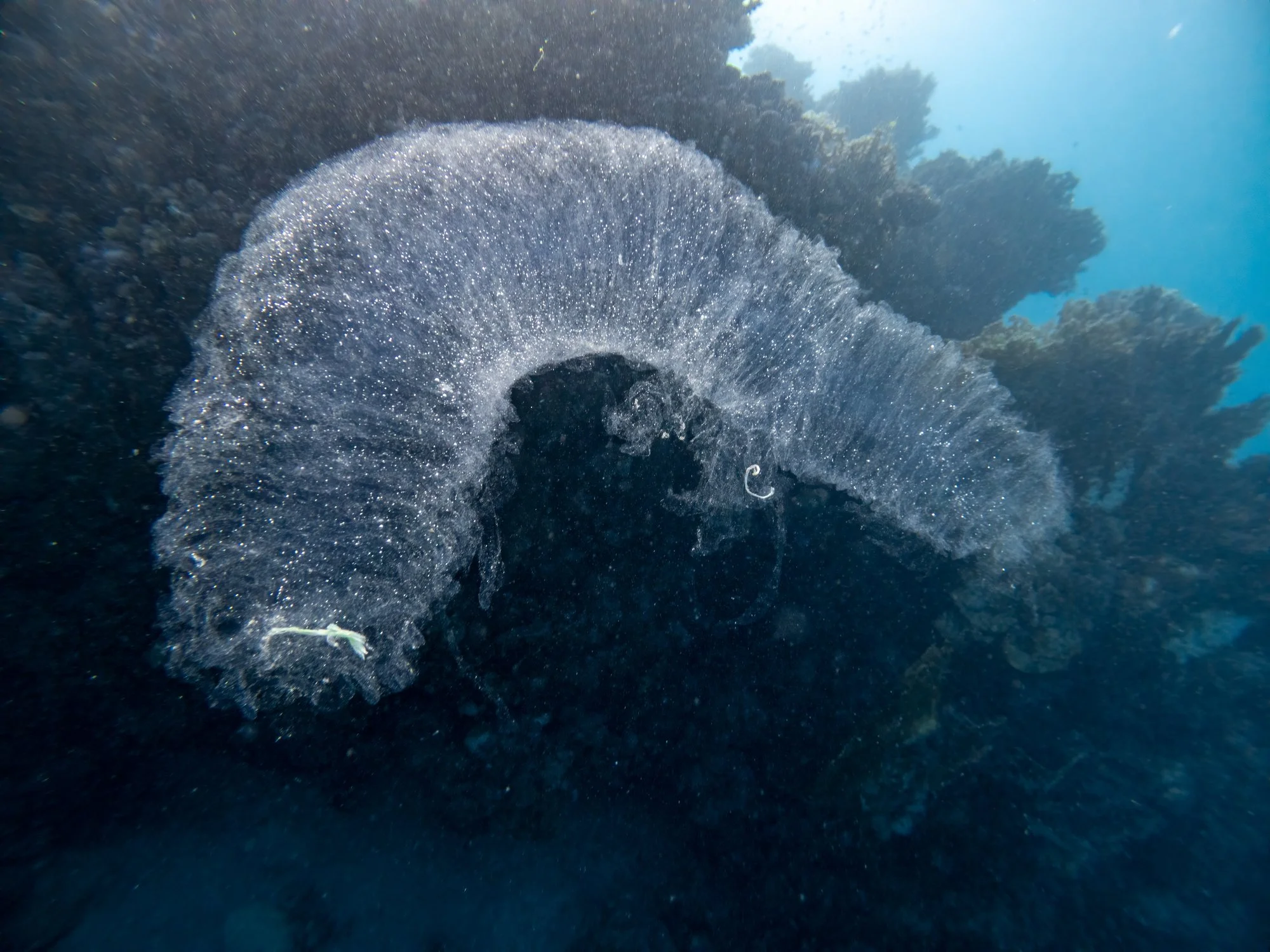
Fig 2: How about a mucus cocoon to protect you from pathogens, parasites and predators. You will have to make your own, though; this one is the parrotfish’s! The fish has abandoned it at dawn; the empty cocoon is all that’s left. (Photo credit: iStock/ Peter Heitmann)
Welcome to the world of the Parrotfish, a fish (and I don’t know how to say this without sounding ridiculous) that looks alarmingly like a parrot. Actually, it is the mouth which is the giveaway, for it is shaped like a parrot’s beak. Silly me, for I was thinking that it gets its name from its bright parrot-like colors (or does it, really?). The beak is a stuff of legends. A thousand teeth are arranged in 15 rows, which fuse together to form the ‘beak’. The parrotfish teeth are harder than many metals and would beat gold, copper and silver in a fracture test. The ‘beak’ known to withstand 530 tons of pressure—about the weight of 88 elephants!
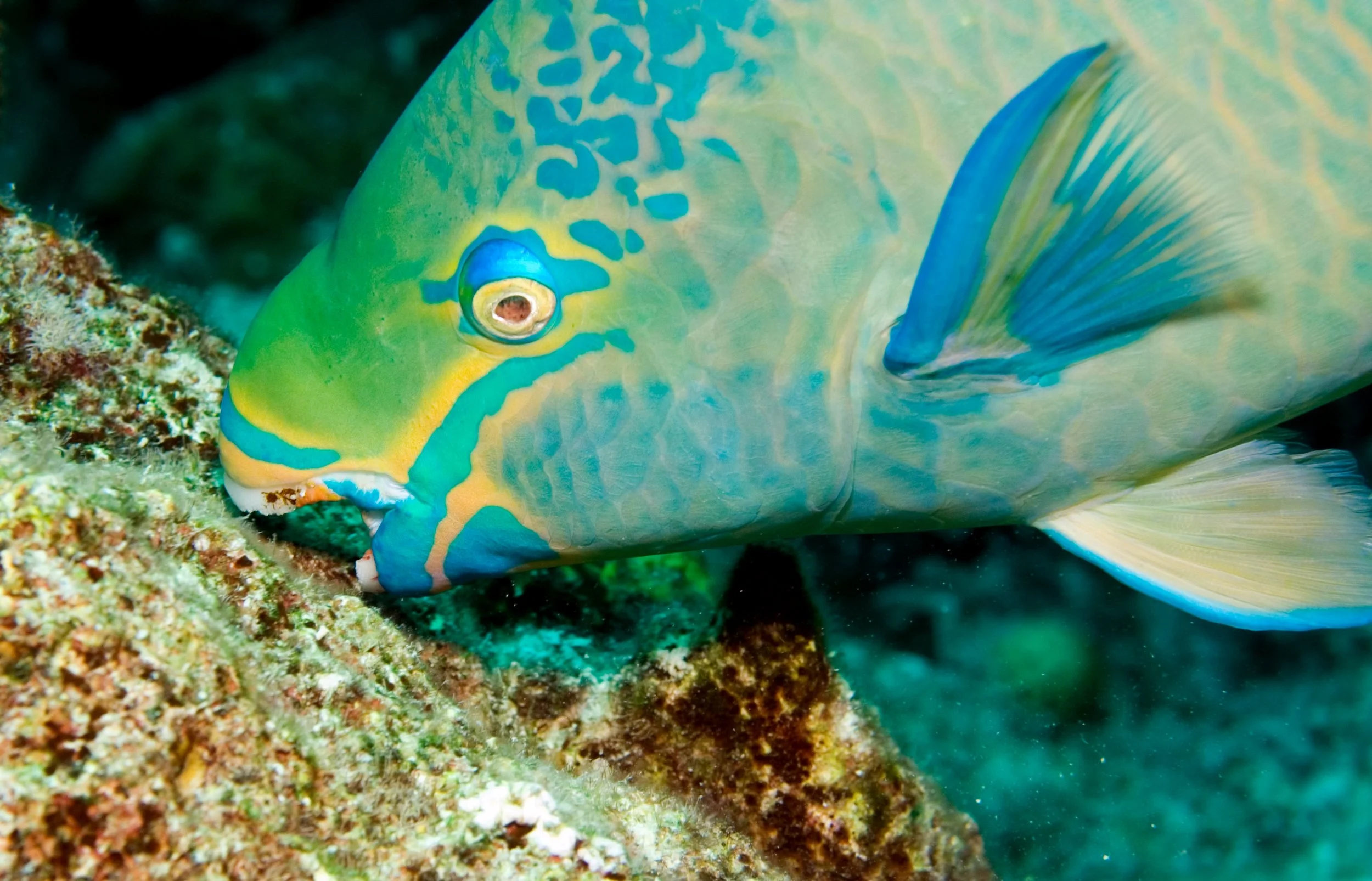
Fig 3: A parrotfish munching on coral algae. (Photo credit: iStock/DurdenImages)
Why does this fish need such strong teeth, though? Parrotfish munch on coral in an effort to reach the nutrient-rich algae inside. The function of the super-sturdy teeth is to grind up the crunchy corals! The act is not subtle either; divers report hearing the crunching and grinding sound underwater when parrotfish nearby are having their crunchy-licious meal. The coral itself is of no use to the fish; it is after the algae that grows inside the corals. Any coral that it ingests will be pooped out as sand – lots and lots of it. A single parrotfish could produce up to 90 kilograms of sand each year. It is estimated that they produce 85% of the new sand in Maldives. If there are any Aussies out there reading this article, parrotfish are among the primary drivers for the formation of reef islands on the Great Barrier Reef!
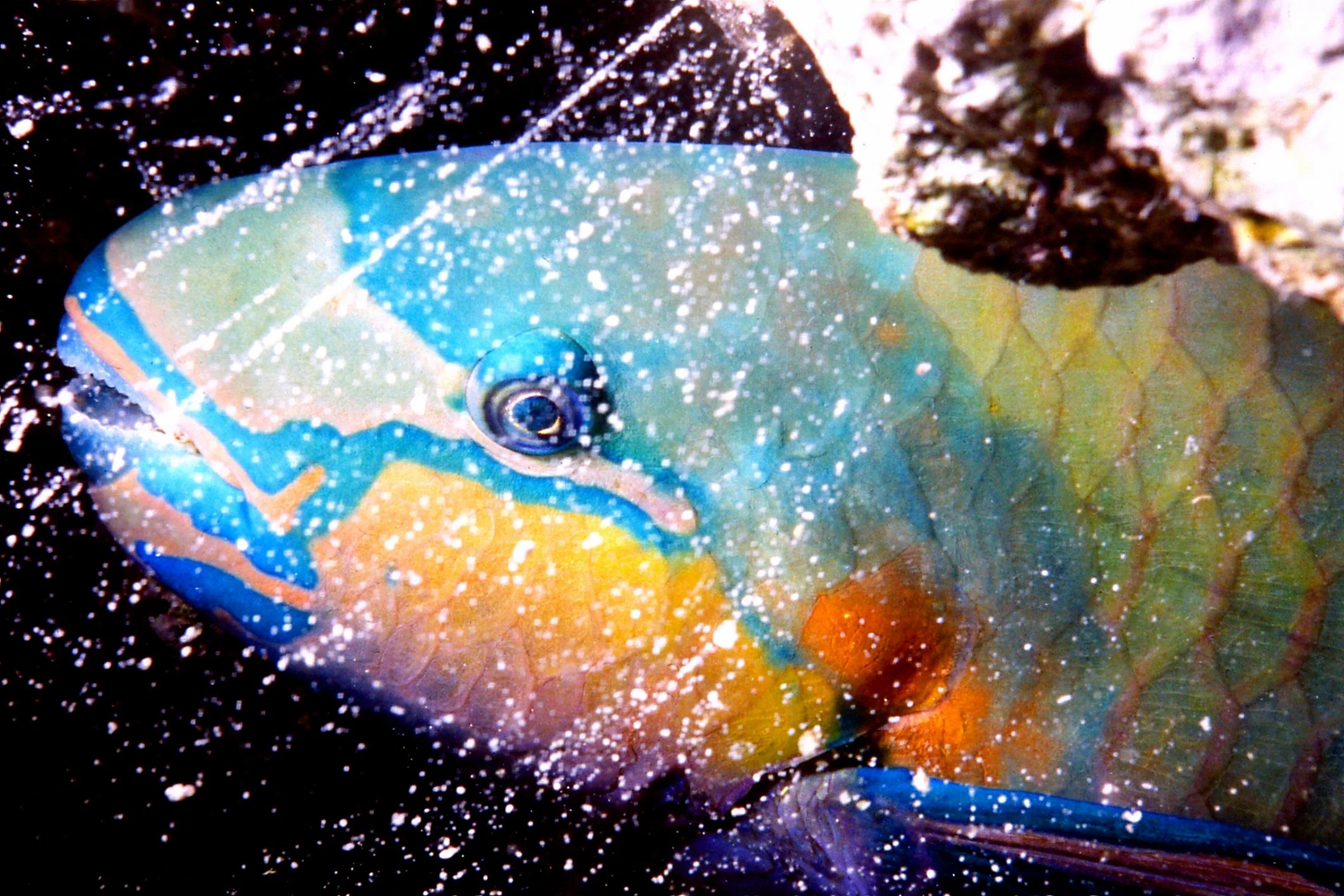
Fig 4: The mucus cocoon of a parrotfish is multi-functional. It is a sunscreen, a mosquito net, a defensive shield and a burglar alarm, all rolled in one. (Photo credit: iStock/Mariedofra)
Wait…how did we get to the topic of Parrotfish? Of course, thanks to your forgotten sunscreen and mosquito nets. The parrotfish has a gland that constantly churns out mucus to protect its skin from ultraviolet light – like a slime sunscreen. It slathers on this mucus majorly on the top half of its body – the part most exposed to sunlight. That’s effective utilization of limited (and expensive) resources! At sundown, the parrotfish sets aside a leisurely hour to create a bubble of another type of mucus. Special glands located behind its gills secrete this mucus, which goes on to cover its entire body. The mucus armor functions like an iron dome; it is laced with antibiotics to kill known pathogens of this fish. The mucus bubble acts as a physical barrier against blood-sucking parasites, and is known to mask the sleeper’s body odor, protecting it from scent-tracking predators such as moray eels. As if that was not enough, it also acts as a burglar alarm system – the instant the bubble is disturbed or torn, its owner wakes up and makes its grand escape. For a moment. imagine yourself in the shoes of a parrotfish. Every night, you spend one hour putting together a sleeping bag which is somewhat like a multi-purpose Swiss Army knife – it protects you against harmful microbes, keeps out pesky blood-suckers, shields you against hungry predators, and acts as a burglar alarm system. If there ever was a secret recipe for a good night’s sleep, this is it!
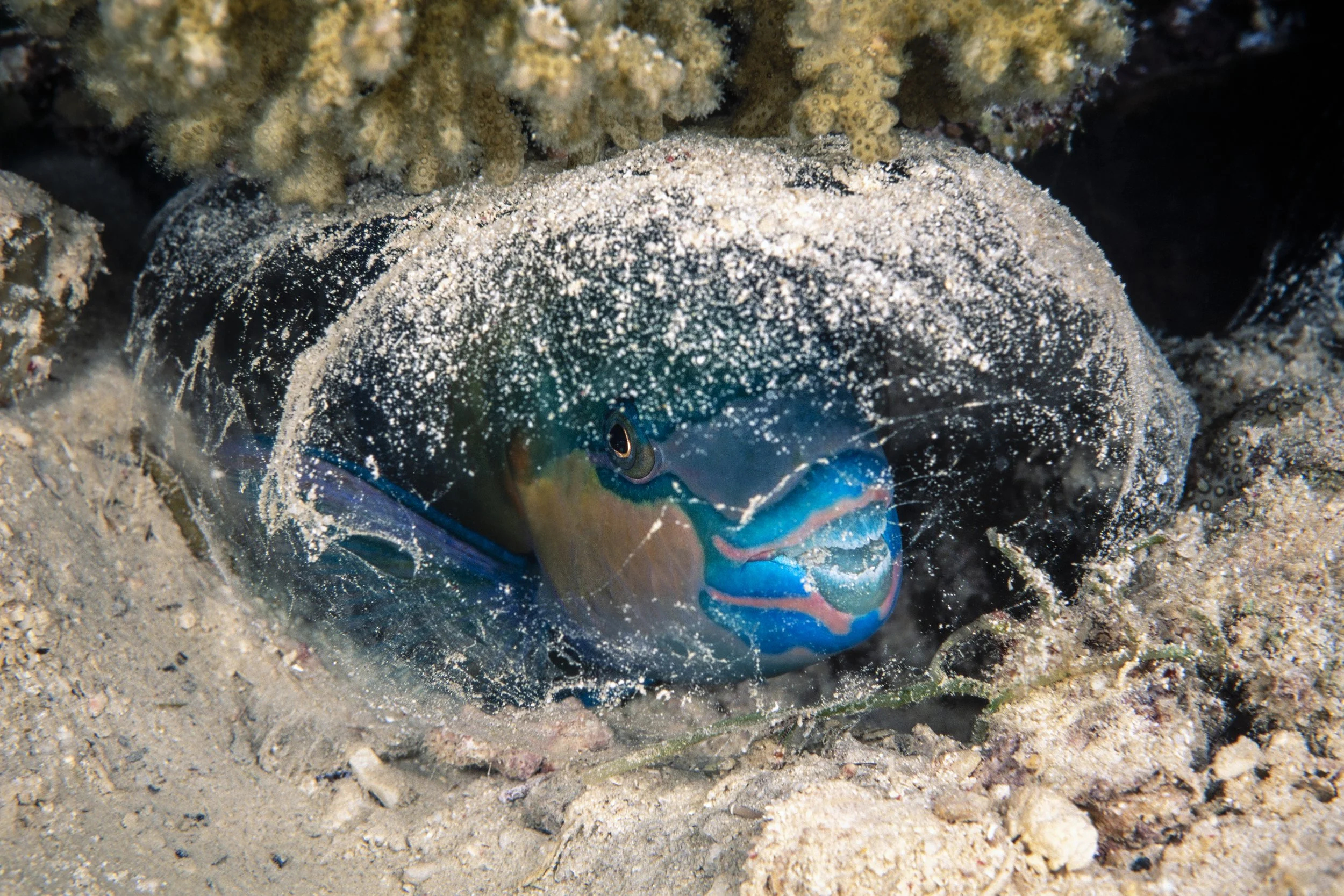
Fig 5: A five-saddle parrotfish (Scarus scaber) and its Swiss Army knife…I mean, mucus cocoon. (Photo credit: iStock/LeventKonuk)
